Duck-like Birds

Description
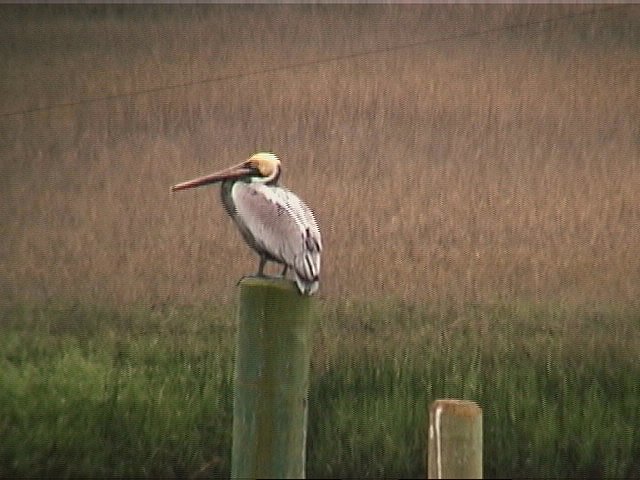
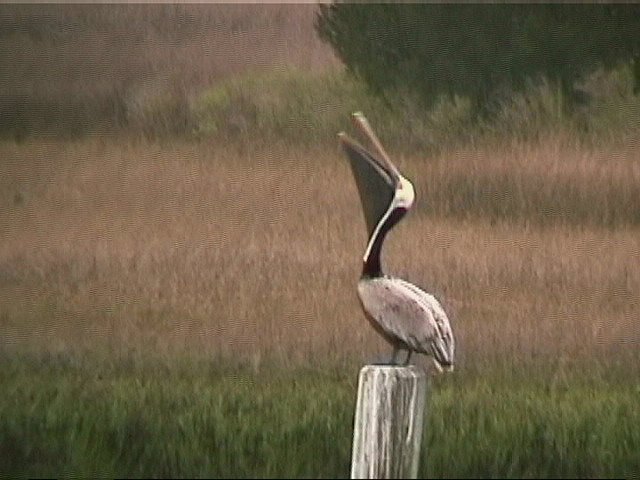
45-54" (1.1-1.4 m). W. 7'6" (2.3 m). A very large, stocky bird with a dark brown body and a long flat bill. The only non-white pelican in the world. Head whitish in adults, with dark brown on hindneck during breeding season. Young birds have dark brown head and whitish bellies.
Voice
Usually silent, but utters low grunts on nesting grounds.
Discussion
These social colonial birds fly in single file low over the water; on sighting prey they plunge with wings half-folded, from heights of up to 50 feet (15 meters), surfacing to drain water from their bills before swallowing the fish. Unlike its larger white relative, the Brown Pelican seldom soars. Around waterfronts and marinas individual birds become quite tame, taking fish offered them by humans.