Trouts and salmons
Description
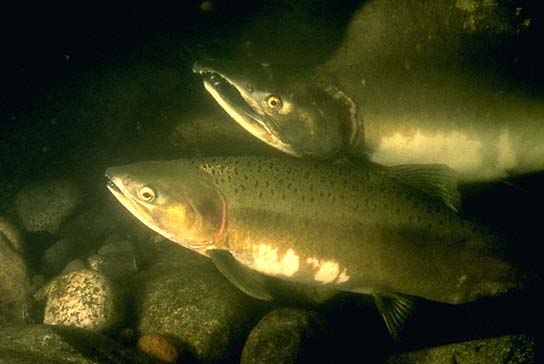
To 3'4" (1 m); 35 lb (16 kg). Elongate, compressed, streamlined. Back steel blue; sides silvery; back, upper sides, and dorsal, adipose, and caudal fins finely speckled with black; anal and pelvic fins white-tipped. Spawning adults brownish red on sides, with greenish bars or mottling. 18–26 gill rakers on first arch. Lateral line with 124–153 scales.
Endangered Status
The Chum Salmon is on the U.S. Endangered Species List. Naturally spawned populations in the Columbia River drainage and naturally spawned summer-run populations in the Hood Canal and its tributaries and in Olympic Peninsula rivers between Hood Canal and Dungeness Bay are classified as threatened in Oregon and Washington. The Columbia River catch of Chum Salmon declined from 700,000 fish in 1928 to 10,000 fish in the 1950s. Habitat destruction, the building of hydroelectric dams on migratory rivers, overfishing, and competition with introduced fish are the main threats to the salmon of the Pacific Northwest.
Habitat
Coastal waters; enters streams to spawn.
Range
Pacific and Arctic Oceans from Japan to AK and south to CA; coastal streams south to Sacramento River, CA.
Discussion
This is an important commercial species, especially to native peoples, who use it dried or smoked as winter food for themselves and dogs. It is sometimes referred to as Dog Salmon. The markings on the sides of spawning adults often resemble paint that has run.